

KANDU FIELD GUIDE
By Naz & the Kandu team
Responsible manta encounters in the Maldives
A memorable manta encounter begins with understanding the animal and giving it room. At Kandu, we combine local knowledge with calm observation: no chasing, no touching and no pressure to make an encounter last longer.
Understanding the animal before entering the water
Before an encounter, our team introduces guests to mantas and explains how to behave around them. Learning about the animal is part of the expedition, not just something to do before the swimming starts.
Mantas have large, complex brains, with brain anatomy linked to learning and memory. We avoid ranking them as the “smartest fish”: intelligence is more complicated than a single brain-to-body measurement. See the Marine Megafauna Foundation’s guide to manta anatomy for the science.
Size also depends on the species. Giant oceanic mantas are larger than reef mantas; NOAA describes giant mantas reaching up to 26 feet across. That figure is not a typical size for the reef mantas encountered in the Maldives. Read NOAA’s giant manta profile.
Stay calm. Keep the path clear.
Our message to guests is simple: move slowly, stay calm and never chase or touch a manta. If one swims towards you, stop moving towards it and keep its route clear. When it swims away, let it go. A manta may approach or return, but it decides whether that happens.
Kandu’s usual viewing distance for mantas and other marine wildlife is around 3–4 metres. We do not move closer to force an interaction. Our guides respond to the animal’s behaviour and follow the rules at the site.
A practical checklist for your encounter
Listen to your guide before entering the water.
Enter gently and avoid splashing or sudden movements.
Do not touch, feed, chase or crowd mantas.
Leave a clear route ahead of the animal.
If a manta approaches, remain calm rather than reaching towards it.
Let departing animals leave without following them.
The Manta Trust’s encounter guidance recommends entering at least 10 metres away, not approaching closer than 3 metres, and keeping clear of cleaning areas. Follow any additional site rules and your guide’s instructions.
Knowing when to step back
Wildlife comes first. If an animal appears uncomfortable or changes its behaviour in response to our presence, we end the encounter. We seek quieter opportunities wherever possible and avoid adding to crowding. Other groups may arrive, so an encounter without other boats or swimmers cannot be guaranteed.
The original Kandu photos and video below share moments from our encounters. A photograph cannot establish an exact viewing distance or explain every movement; our approach is to give animals space throughout the experience.
Manta encounter FAQs
Will a manta come close to me?
It may, but there is no guarantee. We observe without chasing, blocking its route or trying to draw it closer. A close approach is the animal’s choice.
Are manta sightings guaranteed?
No. Wildlife activity, weather and sea conditions shape each expedition. Our local team chooses daily plans using conditions and recent observations.
How large are Kandu’s expedition groups?
Our own scheduled expeditions welcome a maximum of 14 guests. Education and respectful behaviour are central to the experience.
Explore with Kandu
Our Manta Migration Expedition is a seven-day, six-night journey, including four nights in Baa Atoll. Explore the trip page for dates, inclusions and practical details, and read our Responsible Travel principles for our wider wildlife-first approach.
VIEW THE MANTA EXPEDITION · OUR RESPONSIBLE TRAVEL PRINCIPLES · ASK KANDU ON WHATSAPP
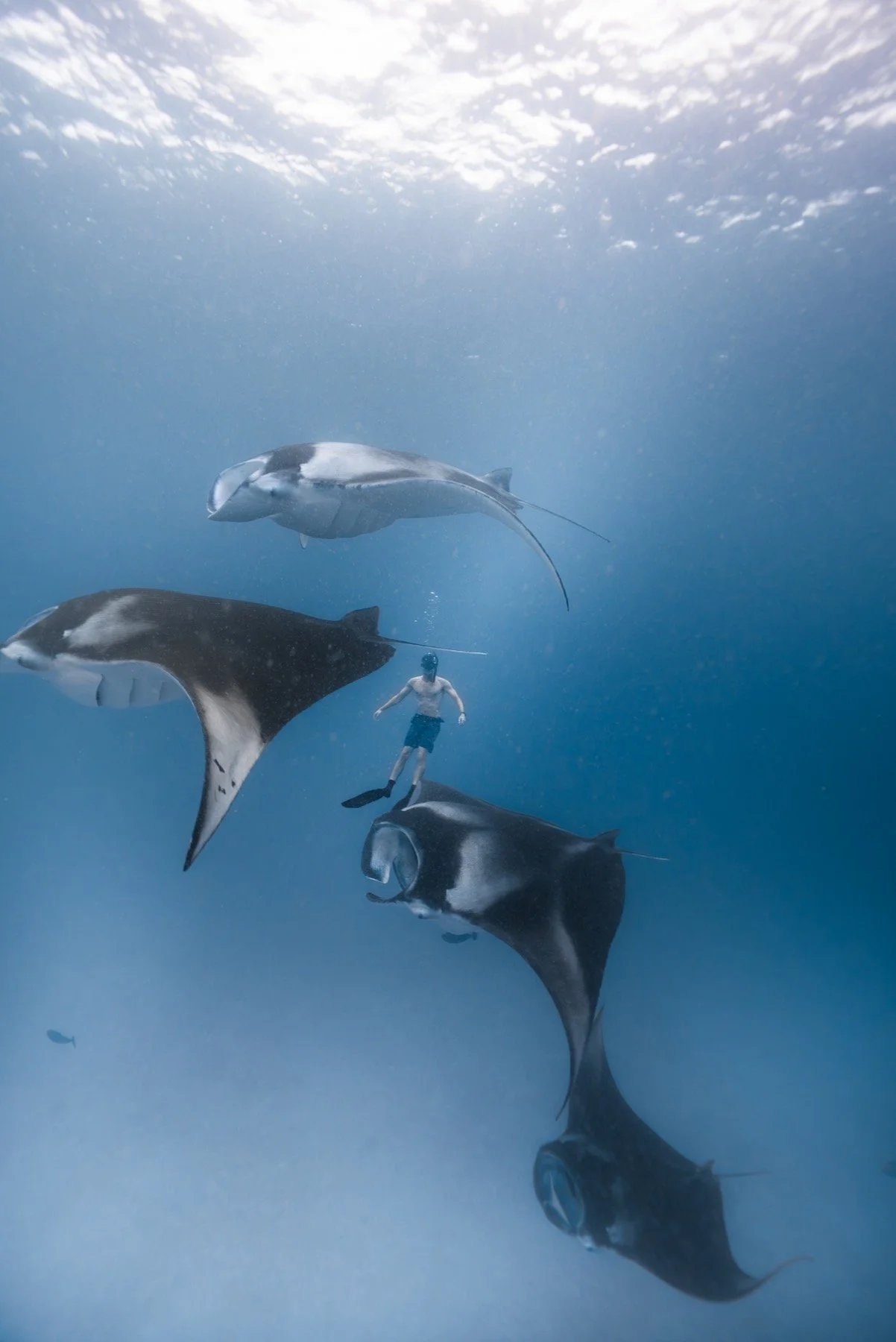
Manta rays and a swimmer photographed underwater during a Kandu Maldives encounter.
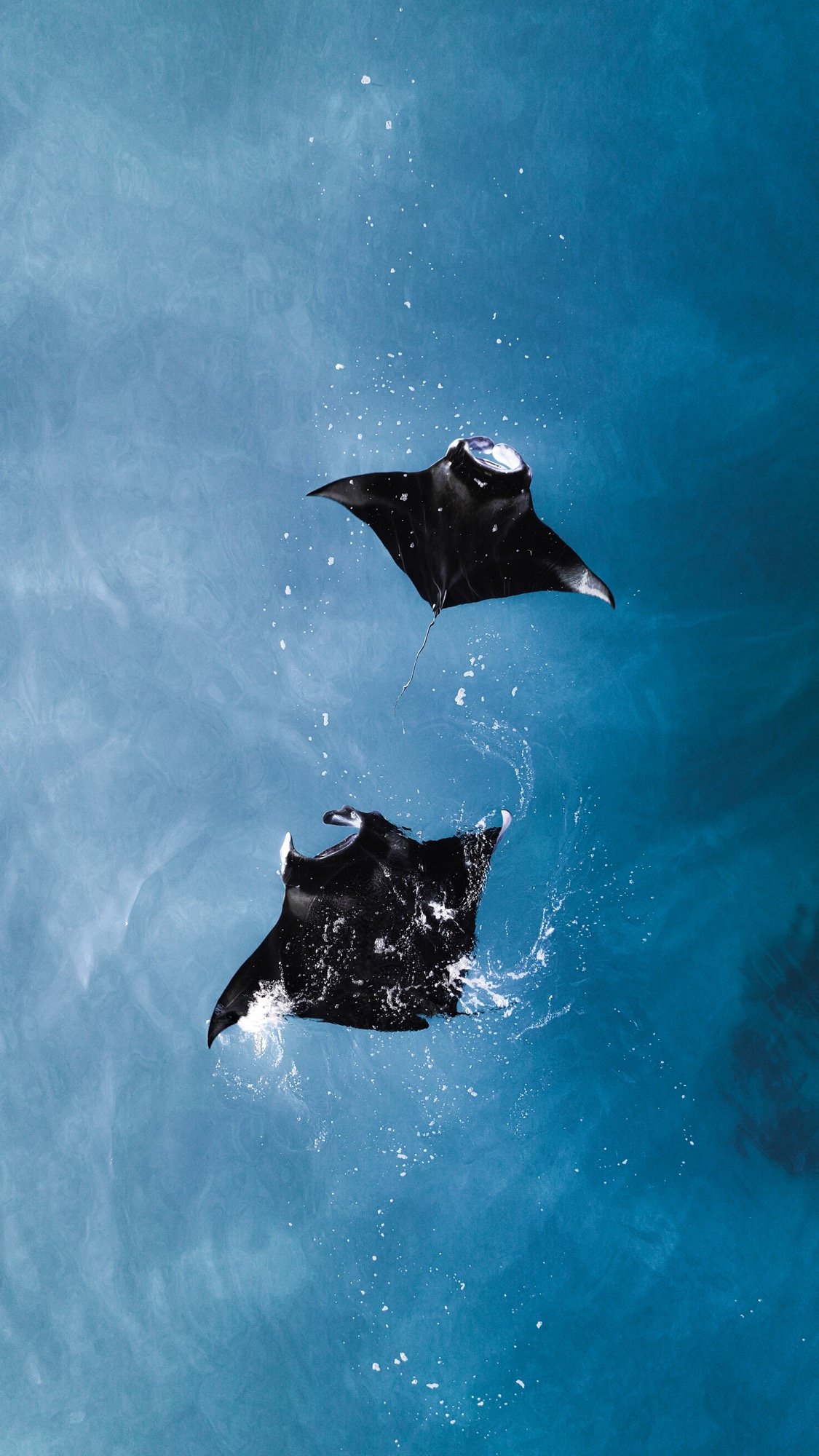
Two manta rays seen from above in Maldivian waters. Original Kandu aerial photography.
Mantas in their own space
An aerial moment from Kandu’s Maldives encounters. Watch a manta moving over shallow water in this original short clip.
A manta ray seen from above over shallow water. Original Kandu footage from the Maldives.